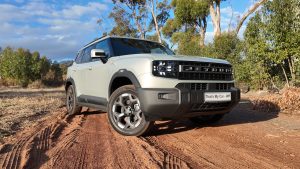
2026 Mercedes-Benz Vito 119 CDI Tourer Select
Historically, placing the three-pointed star onto a commercial-derivative passenger platform mandated a fiscal leap of faith from the South African consumer. When researching an 8-seater bus South Africa can offer, buyers have long accepted this reality. You paid for the badge, the perceived executive shuttle status, and the sheer brand cachet, often leaving mainstream rivals in a comfortably cheaper, volume-driven tier. However, the pricing architecture of the 2026 Mercedes-Benz Vito 119 CDI Tourer Select suggests a fundamental shift in Stuttgart’s local strategy.
Evaluating the current Mercedes-Benz Vito price South Africa reveals a highly calculated pivot. At R1 375 279, it is no longer floating in the fiscal stratosphere. It has been aggressively dragged down into the trenches.
This is not a conventional A/B/C group test. Instead, it is a structural analysis of how Mercedes-Benz has weaponised pricing to ensure its 8-seater bus is finally – and dangerously – within range of its traditional, high-volume competitors. The Mercedes-Benz Vito 119 CDI Tourer Select operates in a space where margins matter just as much as the badge on the grille.

The Vito Tourer Select Specification: A Cabin of Parity
If Mercedes-Benz intends to compete within the R1.3 million sector without heavily relying on its badge, the physical equipment list must justify the capital outlay. The 2026 Vito 119 CDI Tourer Select succeeds in this regard by effectively eliminating the concept of a bare-bones base model. Mechanically, the 119 CDI nomenclature denotes a robust 2.0-litre, four-cylinder turbodiesel powerplant paired with the brand’s smooth-shifting 9G-Tronic automatic transmission.
Delivering 140 kW and a muscular 440 Nm of torque available from just 1,400 rpm, it guarantees effortless rear-wheel-drive momentum even when the cabin is fully loaded with eight occupants. With Mercedes-Benz claiming an average fuel consumption figure of 7.2 L/100 km, the standard 70-litre tank affords an estimated driving range nearing the 970 km mark – a vital operational metric for long-haul fleet operators.

Crucially, the interior architecture finally mirrors the high standards of the broader passenger vehicle lineup. The cabin is dominated by the latest-generation NTG7 MBUX infotainment system. Utilising a crisp 10.25-inch touchscreen paired with a 5.5-inch colour TFT instrument cluster, it offers seamless integration of wireless Apple CarPlay and Android Auto. This digitised interface elevates the operational environment from commercial utility to an executive lounge. Comfort is prioritised through standard climate control, a multifunction steering wheel with heating functionality, and heavily bolstered comfort suspension seats for the driver and front passenger.

On the exterior, the Tourer Select asserts its premium positioning with 17-inch multi-spoke light-alloy wheels, a chrome-plated radiator grille, and sophisticated MULTIBEAM LED headlamps featuring Highbeam Assist Plus. It also integrates practical luxury through the EASY-PACK package, which brings electrically operated sliding doors for effortless ingress and egress. Standard safety systems complete the package, pulling heavily from the brand’s passenger car pedigree. Active Lane Keeping Assist, Blind Spot Assist, and a comprehensive Parking Package with a high-definition reversing camera ensure the Vito not only feels like a proper luxury shuttle but also actively protects the occupants and cargo inside it.

The Blue Oval Metric: Equipment over Aesthetics

To understand the Vito’s strategic positioning, one must look at the Ford Tourneo Custom 2.0 SiT Titanium X, priced at R1 278 500. Anyone analysing the Ford Tourneo Custom Titanium X price will immediately note its aggressive value proposition within the segment. While the Tourneo Custom 2.0 SiT Sport is available for a lower R1 232 000, it relies heavily on visual aggression and exterior styling cues.
In the executive shuttle and premium family transit sector, buyers prioritise interior architecture, standard technology, and passenger refinement. It functions as the benchmark luxury commercial passenger van, offering a cabin environment that demands critical attention. The Titanium X was selected as the true benchmark because its comprehensive equipment suite provides the necessary luxury parity to stand toe-to-toe with the Tourer Select.
At R1.27 million, the Ford presents a highly rational, tech-forward proposition. Yet, the financial delta between this top-tier Ford and the Mercedes-Benz Vito is less than R100 000. In the realm of high-end vehicle financing, that translates to a marginal variance in monthly instalments. Mercedes-Benz is actively betting that buyers will absorb this minor premium to secure the prestige of the badge, effectively nullifying Ford’s historical price advantage.
The Wolfsburg Benchmark: The Price of Traction

Volkswagen’s grip on the South African bus market is a matter of cultural and historical record. The definitive Mercedes Vito vs VW Kombi debate has raged for decades, often hinging on the significant financial gulf between the two. The Volkswagen Transporter 2.0TDI Kombi SWB Style 4Motion commands an asking price of R1 342 400.
We specifically bypassed the cheaper Kombi SWB Edition (R1 227 800) for a critical mechanical reason: the Edition is front-wheel drive. At the R1.3 million threshold, a vehicle must offer a definitive operational advantage. The Style 4Motion brings all-wheel-drive traction to the table, validating its elevated price point.
For buyers actively searching for a VW Transporter 4Motion vs Mercedes Vito comparison, the mechanical breakdown is critical. However, this is exactly where the Vito 119 CDI’s pricing strategy becomes ruthlessly apparent. The Transporter Style 4Motion is a mere R32 879 cheaper than the Mercedes-Benz. While the VW offers the undeniable utility of an all-paw drivetrain, the Vito counters with rear-wheel-drive dynamics and undeniable brand equity. For the corporate fleet buyer or the affluent private consumer, the Mercedes is no longer the “expensive alternative.” It is a direct, cross-shop reality.
Vito Tourer Select An In-Range Mercedes-Benz?

The data indicate a calculated market recalibration. What was once purely a premium executive shuttle SA buyers reserved for specialised fleets is now heavily targeting the private sector. Mercedes-Benz has historically relied on a 15-20% price premium to separate its passenger vans from the Ford and Volkswagen alternatives. By bringing the 2026 Vito 119 CDI Tourer Select to market at R1.37 million, that premium has been compressed to a fraction of its former self. In the fiercely contested arena of the R1.3 million family bus, every rand dictates market share.
It signifies an acknowledgement of a maturing, highly competitive segment where buyers are meticulously analysing value propositions rather than blindly purchasing based on brand loyalty. The Vito is no longer relying solely on the gravitas of its grille; it is competing on the spreadsheet. For the South African market, this aggressive fiscal positioning answers the ultimate question: Yes, this is finally an in-range Mercedes-Benz.